Most homeowners don't think about their driveway until there's a problem. But by the time you have a serious crack or pothole, you've already missed the window where sealing was cheap and easy. Here are 7 signs that your driveway is telling you it needs attention — before it becomes a costly repair.
-
1
Water soaks in instead of beading up
This is the simplest test: pour a cup of water on your driveway. If it beads up and rolls off, the sealant is still working. If it soaks in and darkens the surface, the protective layer is gone. Water is the #1 enemy of asphalt — it seeps into micro-pores, freezes, and expands, widening cracks from the inside out.
-
2
The colour has turned grey or brown
Fresh asphalt is dark black. As the binders oxidize from UV exposure and traffic, it fades to grey. That grey colour isn't just cosmetic — it means the asphalt's protective oils are depleted and the surface is becoming brittle. Sealing restores both the look and the flexibility. If your driveway looks washed out, it's overdue.
-
3
Small cracks are appearing along the edges
Edge cracking is one of the earliest signs of sealant failure. The edges of your driveway get the most freeze-thaw stress because they're in contact with soil that shifts. Small hairline cracks caught early can be filled before sealing — at minimal cost. Left another 1–2 seasons, they widen and connect into what's called "alligator cracking," which signals structural failure and requires repaving.
-
4
You haven't sealed it in 3+ years
In Toronto's climate, asphalt sealant has a realistic lifespan of 2–3 years under regular use. If it's been longer than that since your last sealing — or you're not sure when it was last done — it's time. The cost of sealing ($200–$400) is a small fraction of what partial repaving costs ($3,000–$8,000).
-
5
You can see loose aggregate or a sandy surface
Run your hand across your driveway. If you feel loose gravel or gritty material, the surface aggregate is separating from the binder — a sign of advanced oxidation. This is a clear signal that sealing is needed urgently. Once aggregate loss is widespread, you're looking at a resurfacing job instead of a simple seal.
-
6
Oil or fuel stains have soaked in
Oil is an asphalt softener — it breaks down the binder and creates soft spots that deform under tire pressure. If you have stains from a leaking car, those areas need to be degreased and sealed promptly. A sealed surface is far more resistant to oil penetration and much easier to clean after spills.
-
7
Interlock joints are loose or washing out
If you have an interlock or paving stone driveway, check the sand in the joints. If it's washing away, weeds are growing between stones, or individual stones are rocking underfoot, joint sand is depleted. Sealing interlock stabilizes the joints and locks polymeric sand in place — preventing weeds and keeping stones tight for years.
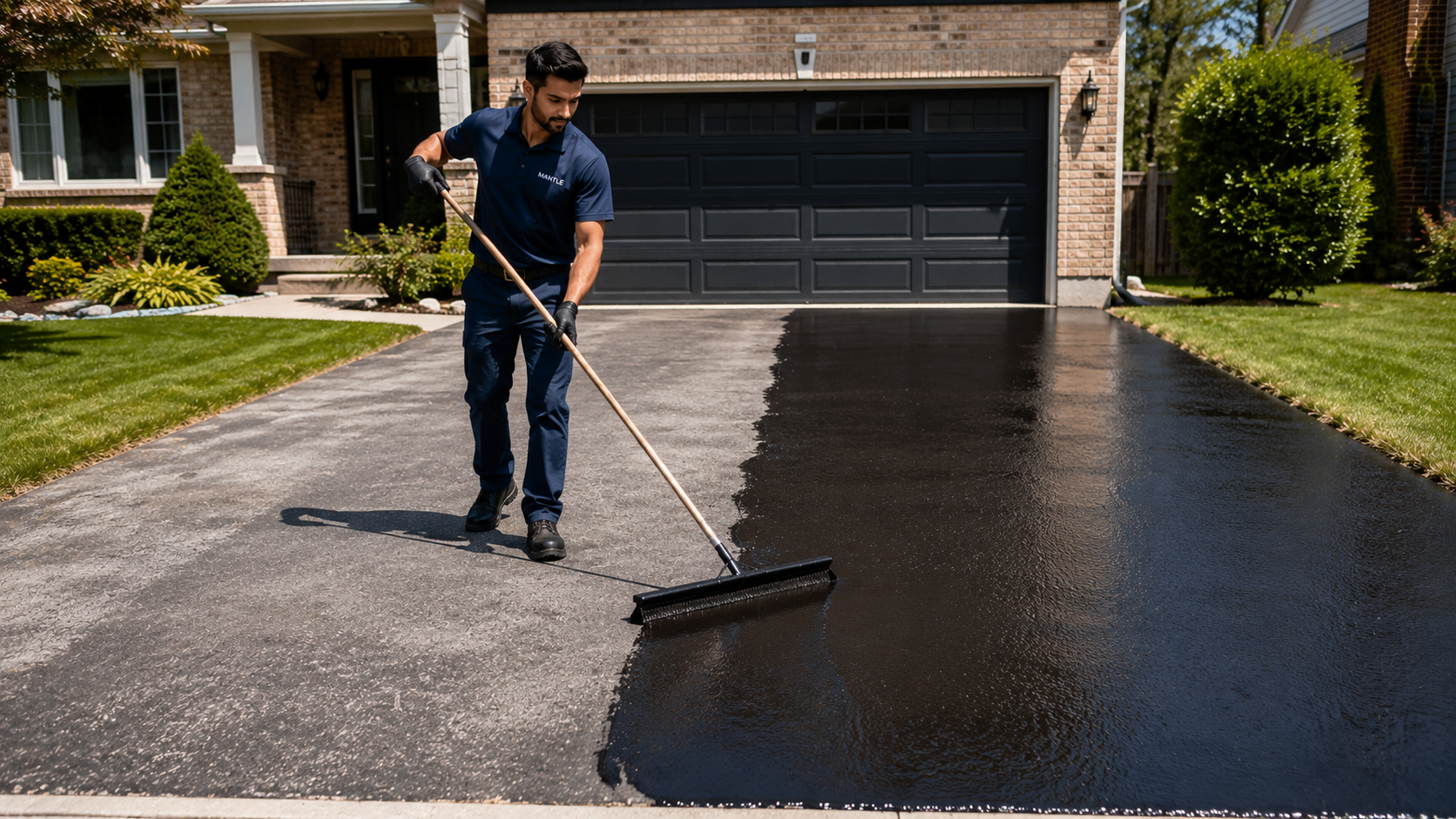
What happens if you wait?
Driveway deterioration follows a predictable curve. For the first 5–7 years, routine sealing keeps costs very low (under $400/visit). After that, unsealed driveways begin to crack structurally. By 10–15 years, many unsealed driveways need a partial patch and resurface — typically $1,500–$3,000. A full repave of a double-car driveway in Toronto runs $4,000–$8,000.
Sealing every 2–3 years costs roughly $1,200–$1,500 over 10 years. Waiting and repaving costs 3–5x that. The math is clear.
The 30-second driveway health check
- Look at the colour — is it grey or black?
- Check the edges — any hairline cracks forming?
- Pour water on it — does it bead or soak in?
- Check the joints (interlock) — is sand present and stable?
If two or more of these are a concern, it's time to book.
Not sure if your driveway needs sealing?
Get a free assessment and quote. Serving Toronto and all of the GTA.
Get Free Estimate Call (437) 494-8446