7 Pressure Washing Mistakes That Destroy Toronto Homes
Wrong PSI. Wrong nozzle. Wrong surface. How to avoid expensive damage.
A rented pressure washer and a YouTube tutorial. That's how most Toronto homeowners end up with etched concrete, blown-out brick mortar, and forced water damage behind their siding. Pressure washing is the most dangerous home cleaning task you can DIY. Here are the 7 mistakes that cause real damage — and how professionals avoid them.
1
Using Too Much Pressure on Brick
Toronto has two types of brick: modern (post-1950, Portland cement mortar) and heritage (pre-1920, lime mortar). They require completely different pressure. Most homeowners blast both at 3,000+ PSI.
❌ Damage: Blows lime mortar from joints. Once gone, water infiltrates the wall cavity, causing efflorescence, spalling, and structural damage. Repointing heritage brick: $15-$40 per square foot.
✅ Pro approach: Heritage brick: soft wash only (500 PSI max + cleaning solution). Modern brick: 1,500-2,000 PSI max, 25° nozzle, 12+ inches from surface.
2
Pressure Washing Windows
This is the #1 mistake on this list. People pressure washing their siding point the wand at windows. Even "careful" passes.
❌ Damage: Shatters single-pane glass. Forces water past weatherstripping into wall cavities. Damages window seals causing permanent fogging. Strips paint from wood frames. One pass = hundreds in repair.
✅ Pro approach: NEVER aim a pressure washer at windows. Period. Windows are hand-cleaned or cleaned with purified water at garden-hose pressure. At MANTLE, ClearCoat™ purified water handles window cleaning — zero pressure, zero damage.
3
Wrong Nozzle for the Surface
Pressure washers come with 4-5 nozzle tips (0°, 15°, 25°, 40°, soap). Most rentals default to 15° or 25°. People don't know which to use.
❌ Damage: 0° nozzle (red) cuts through wood like a knife and etches permanent lines in concrete. 15° on soft surfaces strips paint and gouges wood. Wrong nozzle at wrong distance = permanent surface damage.
✅ Pro approach: Concrete: 15° or 25° at 3,000-4,000 PSI, 6-8 inches. Wood: 40° at 1,200-1,500 PSI, 12+ inches. Siding: 25° at 1,500 PSI, 12+ inches. Surface cleaner attachment for large concrete areas (eliminates striping).
❌ Damage: At 2 inches: 3,000 PSI becomes ~12,000 PSI effective pressure. Etches permanent tiger-stripe lines in concrete. Gouges wood grain. Creates uneven cleaning that looks worse than dirty.
✅ Pro approach: Minimum 6 inches for concrete, 12 inches for wood/siding, 18 inches for painted surfaces. Consistent distance = even cleaning. Surface cleaners maintain perfect distance automatically.
5
Skipping the Pre-Treatment
Grabbing the wand and blasting immediately. No soap, no pre-soak, no dwell time.
❌ Damage: Without pre-treatment, you need MORE pressure to remove the same grime. More pressure = more damage. Algae, mould, and mildew laugh at pressure alone — they need chemical treatment to actually die.
✅ Pro approach: Apply cleaning solution first (SH for organic growth, degreaser for oil). Let dwell 10-15 minutes. The chemical does 80% of the work. Pressure does 20%. Result: lower PSI needed, better clean, zero damage.
6
Pressure Washing Upward Under Siding
Vinyl, aluminum, and wood siding are designed to shed water DOWNWARD. Pressure washing upward forces water behind the panels.
❌ Damage: Water behind siding → trapped moisture → mould growth within 48-72 hours in summer. You won't see the mould for months. By then: insulation damage, wall cavity contamination, $5,000-$15,000 remediation.
✅ Pro approach: Always wash siding top-down at a 45° downward angle. Never aim upward into seams, joints, or overlaps. Keep nozzle at siding level or above, never below.
7
Ignoring Toronto's Heritage Brick
Toronto has more heritage brick buildings than almost any city in North America. Pre-1920 brick uses lime mortar — it's fundamentally different from modern brick.
❌ Damage: Modern pressure washing was designed for modern materials. Heritage lime mortar is soft — intentionally soft, so bricks expand and contract without cracking. High pressure destroys this system permanently.
✅ Pro approach: Heritage brick = soft wash ONLY. Low pressure (500 PSI or garden hose) with heritage-safe cleaning solution. No acids (reacts with lime). No wire brushes. If your contractor doesn't ask about your brick age, they don't know what they're doing.
The PSI Guide: What's Safe for What
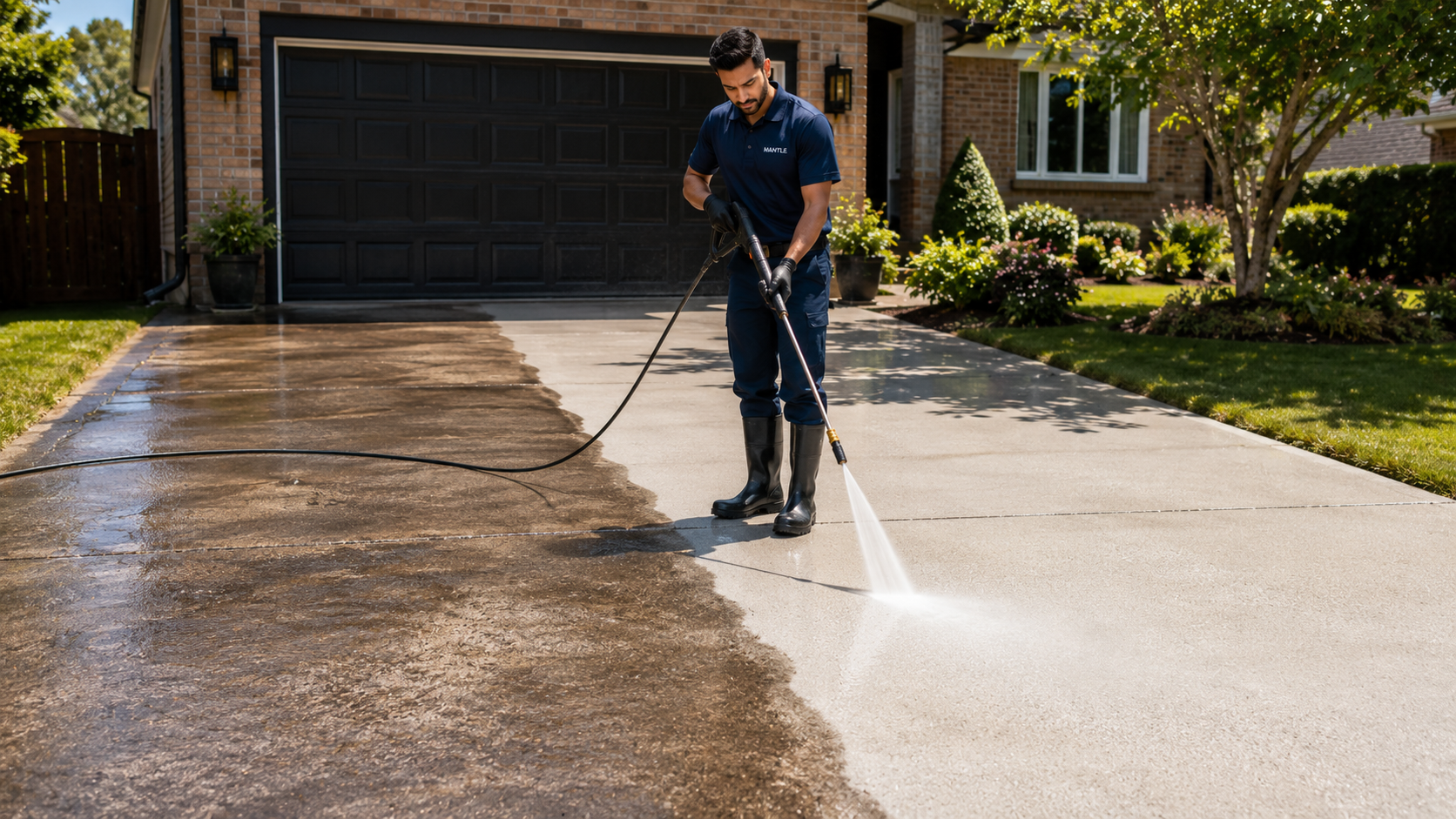
The clean line tells the story — professional pressure washing works
Surface
Safe PSI
Danger PSI
Nozzle
Modern concrete
3,000-4,000
4,000+
15° or surface cleaner
Modern brick
1,500-2,000
2,500+
25°
Heritage brick
500 max
1,000+
Soft wash / 40°
Wood deck
1,200-1,500
2,000+
40°
Vinyl siding
1,300-1,600
2,000+
25°
Interlock/pavers
2,500-3,000
3,500+
25° + re-sand after
Windows
0 (never)
Any
Hand-clean only
Roof shingles
0 (never)
Any
Soft wash only
The rental trap: Home Depot and rental centre pressure washers are 3,000-4,000 PSI with limited nozzle options. They're designed for one use case: cleaning concrete driveways. Using them on any other surface without training is like using a chainsaw to trim a hedge — technically possible, probably damaging.
Let Professionals Handle It
MANTLE uses calibrated PSI for every surface. Heritage brick safe. Soft wash available. Before/after photos.